2026-10-22 · Mike Harlan
Keeping Debris Dry During Seattle Winter Rains
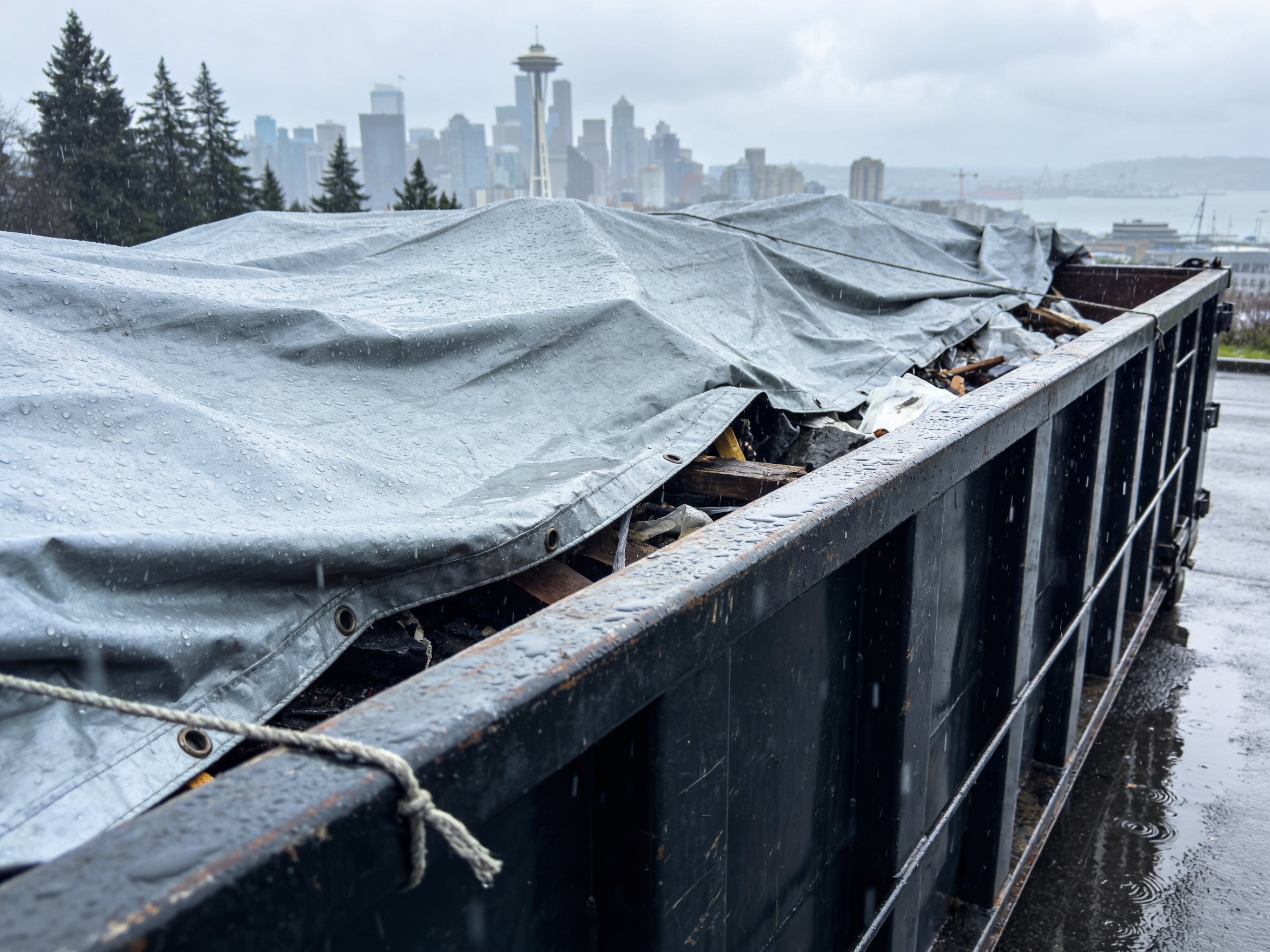
Seattle winters bring steady rain that soaks uncovered debris fast. A 10-mil reinforced tarp secured with ratchet straps every 2 feet along the edges keeps most loads dry enough to avoid the 20-30% weight gain that turns a standard 10-yard load into an overweight charge. Place the tarp so it overlaps the dumpster sides by at least 12 inches and slopes toward the center to shed water instead of pooling.
Selecting Tarps That Handle King County Downpours
Heavy-duty polyethylene tarps rated for UV exposure last through repeated use in Seattle's frequent overcast conditions. Blue or silver 12-by-20-foot sheets cover a 20-yard container with enough overhang for tying down in gusts common near Discovery Park and the Space Needle. Avoid lightweight construction tarps that tear after one or two storms; they leave debris exposed and increase disposal costs when waterlogged material exceeds weight limits on routes to Bellevue or Kirkland.
Store extra tarps at your 3039 W Commodore Way Unit #6 location so crews can swap them mid-job without delay. Check seams and grommets before each rental; a single failed tie-down lets rain enter from the side and saturate drywall or roofing shingles that were otherwise protected.
Site Placement That Reduces Runoff in Seattle Neighborhoods
Flat driveways in Queen Anne and West Seattle drain better than sloped streets in Fremont or Capitol Hill. Position the container so the open end faces away from prevailing wind-driven rain, which usually comes from the southwest. When street placement is required, review the rules in our guide on Navigating Seattle Street Permits For Dumpster Placement before the first drop-off.
Gravel or paved surfaces under the unit prevent mud from splashing upward during heavy rain. In the University District or Belltown, where alleys often slope toward storm drains, add 4-by-8-foot plywood sheets under the wheels to keep the container level and stop water from channeling inside.
Scheduling Around Dry Spells and Residential Dumpster Rental Needs
Check the forecast for any 48-hour window with less than 0.25 inches expected before booking a Residential Dumpster Rental. Most homeowners in Ballard and Fremont finish loading within two days when rain is light, then cover the load for the remaining rental period. Extending the rental by one day costs less than paying overweight fees later.
Coordinate with the same-day option listed under Dumpster Rental when a sudden storm is forecast; swapping an open container for a covered one mid-project keeps debris dry without extra trips. Homeowners near Pike Place Market or Seattle Center often schedule early-week deliveries so weekend rain does not reach the load.
How Project Type Changes Protection Steps
Roofing debris needs tighter tarping than yard waste because shingles absorb water quickly. The article How Project Type Affects Dumpster Rental Costs In Seattle explains why extra cover material is factored into bids for certain jobs. Concrete and dirt loads stay drier naturally but still require side overlap to block wind-driven rain from the sides.